The real cost of manual invoicing in a testing lab
The real cost of manual invoicing in a testing lab is not the invoice itself. It is the gap between finishing the work and getting paid for it: a separate billing step, project and pricing details retyped into an accounting system, and revenue that waits until someone has time to raise the invoice. When an invoice is generated automatically the moment a report is signed off, that gap closes.
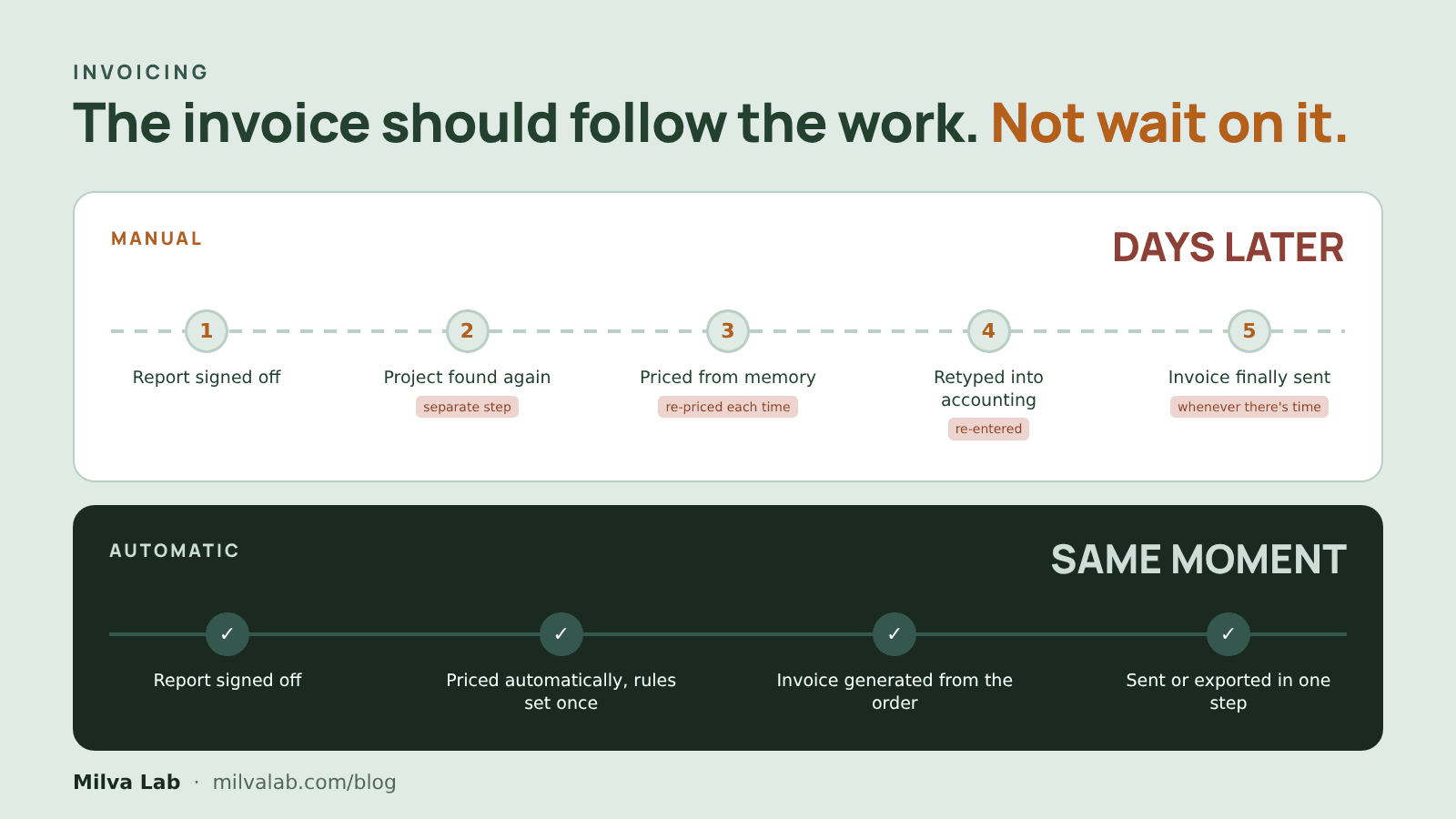
A report goes out to the client on Friday afternoon. The invoice for that same project goes out the following Thursday, not because anyone forgot about it, but because invoicing is still a separate step: find the project again, work out which pricing applies to this client and test type, retype it all into the accounting system, and fit it in between everything else that week.
Why does invoicing lag behind the work?
Billing depends on someone revisiting a job the lab already finished. The project has to be located again, the right pricing worked out for that client and test type, and the details typed a second time into a system separate from the one that ran the lab work. It queues behind whatever else that person is doing, instead of following the report out the door.
- Invoicing waits for someone to find the time, instead of following the completed work automatically
- Project and pricing details get retyped into the accounting system, after they were already entered once at intake
- A result can be signed off and delivered to the client days before the matching invoice goes out
- The revenue cycle runs on whoever's billing queue is shortest that week, not on when the work actually finished
What changes when invoicing is automatic?
With Milva Lab, invoicing is not a separate step that happens after the work. It follows the completed order the moment a report is signed off.
- The invoice is generated automatically from the completed order the moment the report is signed off
- Pricing rules are configured once per test type and client account, so nothing is priced from memory
- Invoices can be sent in one click, or exported directly to Business Central or e-conomic
- Nothing about the project or the client has to be retyped, because the invoice already carries the order's own data
What good looks like
If nothing changes, the invoice keeps waiting on whoever has a free hour that week, pricing gets worked out again from memory each time, and a lab's revenue cycle lags noticeably behind its actual delivery. When invoicing follows the completed order automatically, the lab gets paid on the same rhythm it does the work, and nobody has to set aside a separate afternoon for billing.
If your invoices usually go out days or weeks after the report does, it is worth seeing what it looks like when the invoice is ready the moment the work is.
Frequently asked questions
What is the real cost of manual invoicing in a testing lab?
It is not the invoice itself. It is the delay between finishing the work and getting paid for it: a separate billing step, project and pricing details retyped into an accounting system, and revenue that waits until someone has time to raise the invoice, often days or weeks after the report already went out.
Why does invoicing usually lag behind the lab's actual work?
Because billing depends on someone revisiting a job that is already finished: locating the project, working out the pricing that applies for that client and test type, and typing it into a system separate from the one that ran the lab work. It queues behind whatever else that person is doing that week.
Can invoicing be generated automatically from a finished report?
Yes. With Milva Lab, the invoice is generated from the completed order the moment a report is signed off, using pricing rules configured once per test type and client account. It can be sent in one click or exported to an accounting system.
Does automatic invoicing work with an existing accounting system?
Yes. Invoices generated from a completed order can be exported directly to Business Central or e-conomic, so nothing has to be retyped into a separate system.

Martin Mikkelsen
CCO, Milva Lab